
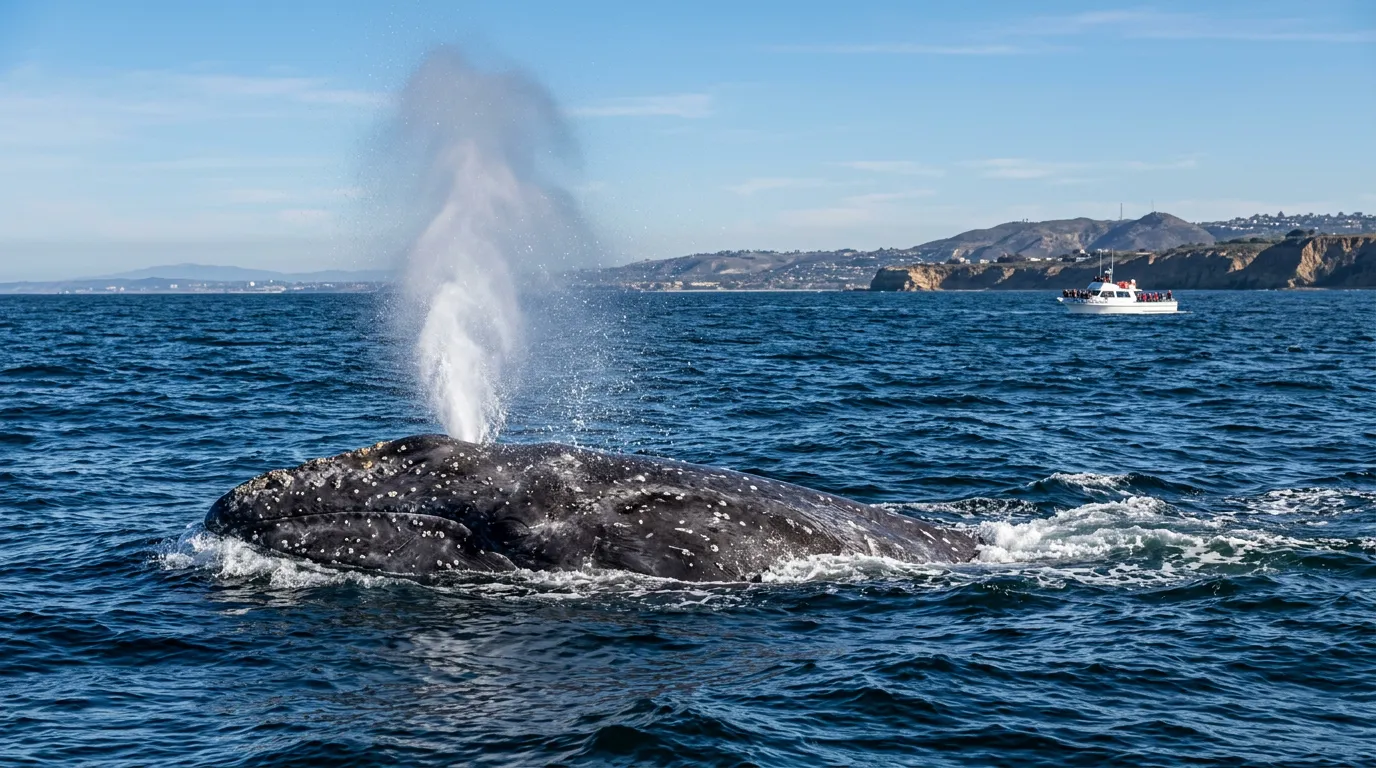
Whale Watching in San Diego: Where and When to See Gray Whales
Gray whales pass San Diego every winter on one of the longest migrations of any mammal, and you can see them from a boat or right from shore. Peak season runs from about mid-December through April, with the most sightings from mid-January to March. In summer, blue whales, the largest animals on Earth, feed off the coast. Here’s where to see them, when to go, and how to choose a tour.
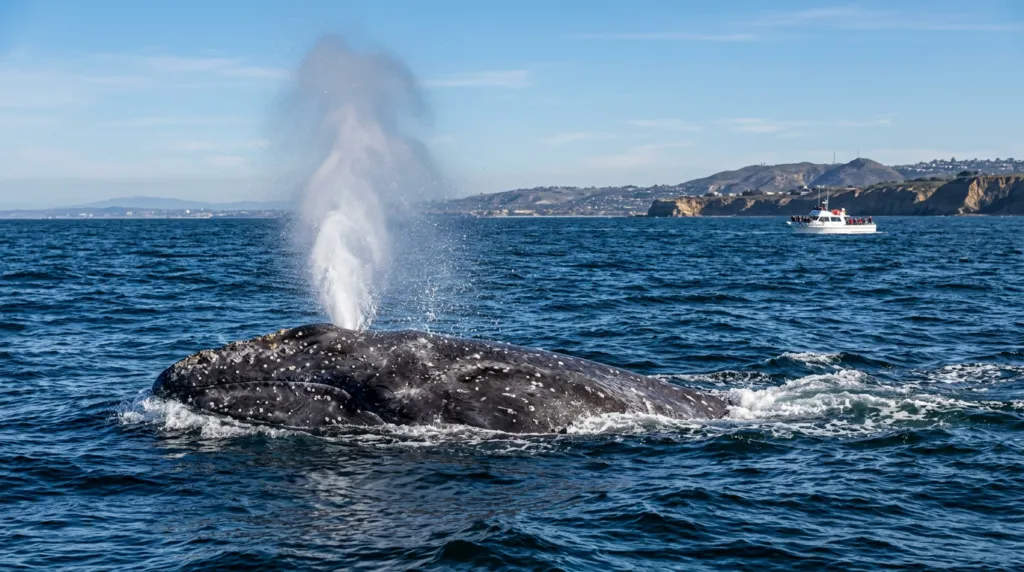
When to see whales in San Diego
- Gray whales (mid-December to April): heading south to Baja’s lagoons in December and January, then back north with calves from February to April.
- Blue whales (summer, roughly June to September): feeding farther offshore, best seen on a boat tour.
- Dolphins, sea lions and other whales: year-round, often seen on the same tours.
Where to see whales from shore (free)
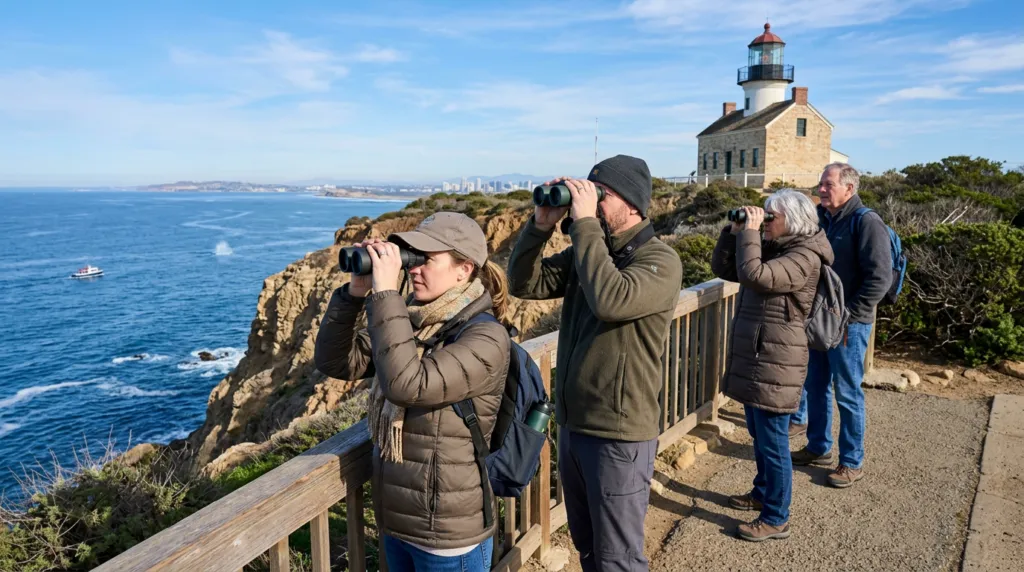
On a clear, calm morning in gray whale season, look for spouts from these spots:
- Cabrillo National Monument, Point Loma: a dedicated whale overlook high above the Pacific (national park entrance fee applies). Make a day of Point Loma.
- Torrey Pines bluffs: sweeping ocean views from the coastal trails. Note that dogs aren’t allowed on the Torrey Pines Reserve trails, so see our best hiking trails list for other options.
- The La Jolla coast: walk the coastline and look offshore, then explore the best of La Jolla.
Bring binoculars, be patient, and look for the spout first. It can be visible from miles away.
Taking a whale watching tour
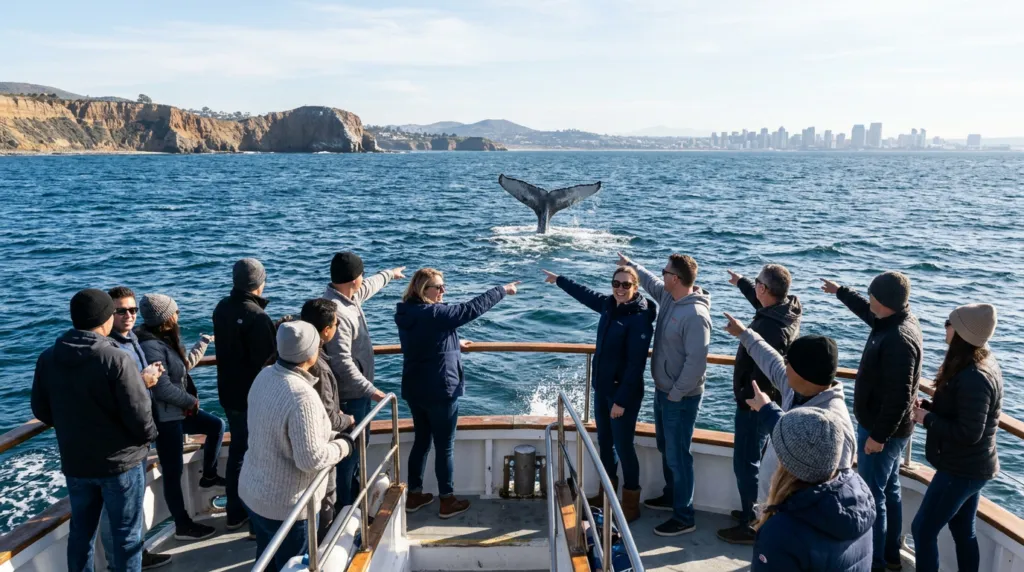
A tour gets you much closer than you can from shore. Most leave from San Diego Bay or Mission Bay and last about 2.5 to 4 hours. When comparing tours, look for:
- A sighting guarantee: many operators offer a free return trip if you don’t see a whale.
- Boat size: bigger boats are steadier for anyone prone to seasickness. Smaller boats get closer.
- A naturalist on board, which makes the trip far more interesting.
- Morning departures, when seas are usually calmer.
Compare San Diego whale watching tours and prices on Viator →
Booking through this link supports San Diego Best: we earn a small commission at no extra cost to you. It doesn’t affect what we recommend.
Prefer to paddle?
For a closer look at sea lions, dolphins and the coast, a kayak tour is a great add-on. Our best kayak and paddleboard rentals ranking covers the top operators, and the guided sea cave tours in La Jolla are a favorite.
Make it a full day
Pair your trip with lunch by the water. See the best seafood restaurants in San Diego, or browse our Free Things to Do in San Diego guide and the San Diego Holiday Lights Guide if you’re visiting in December.
Want this in your inbox? Get the San Diego Best email: the best of San Diego, once a month, free.
Frequently asked questions
When is whale watching season in San Diego?
Gray whale season runs from about mid-December through April, with the most sightings from mid-January through March. In summer, blue whales and other species feed offshore, so tours run year-round.
Can you see whales from shore in San Diego?
Yes. During gray whale season, Cabrillo National Monument in Point Loma has a dedicated whale overlook, and the bluffs at Torrey Pines and the La Jolla coast are good lookouts. Bring binoculars and go on a calm, clear morning.
How long is a whale watching tour in San Diego?
Most tours last about 2.5 to 4 hours and leave from San Diego Bay or Mission Bay. Many guarantee a sighting or offer a free return trip if no whales are seen. Check each operator’s policy.
What should I bring whale watching?
Layers and a windbreaker (it’s cold on the water), sunscreen, sunglasses, binoculars and a motion-sickness remedy if you need one. Take seasickness medication before boarding, not after.
What is the best time of day for whale watching?
Morning trips usually have calmer seas and lighter winds, which makes whales easier to spot and the ride more comfortable.




 San Diego Best